
How to Spot Fake AI Images and Videos (2026)
Artificial Intelligence has transformed the way people create images and videos. While AI technology offers incredible opportunities, it has also…
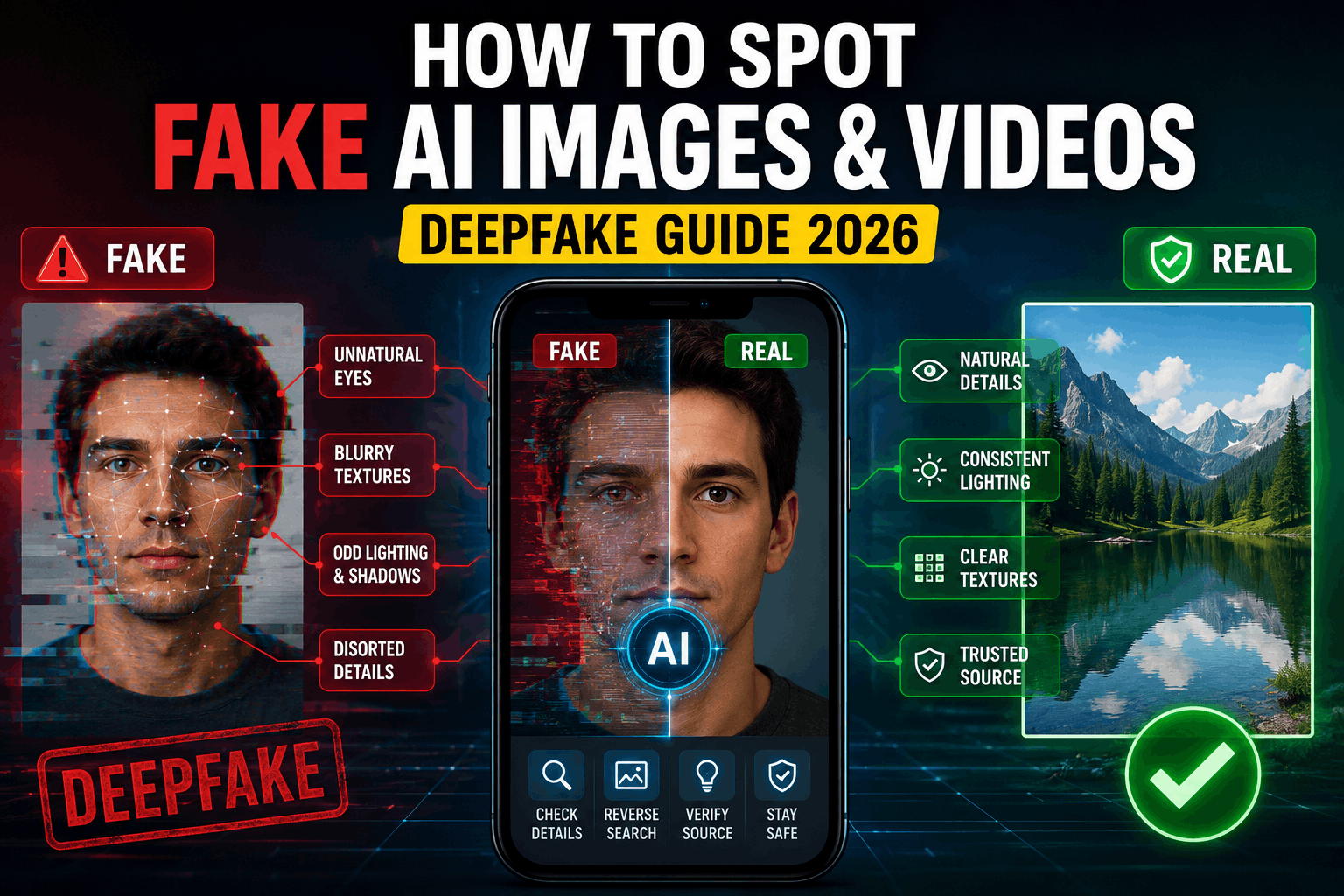
Artificial Intelligence has transformed the way people create images and videos. While AI technology offers incredible opportunities, it has also made it easier for scammers to produce fake content that looks surprisingly real. From celebrity deepfakes to fake news images, AI-generated media is spreading rapidly across social media platforms.
The good news is that fake AI images and deepfake videos often leave small clues. Once you know what to look for, you can identify manipulated content before it misleads you.
In this guide, you’ll learn how fake AI content is created, why it’s becoming more common, and the best ways to detect it in 2026.
AI technology is evolving rapidly, but it also creates new cybersecurity challenges. If you’re interested in useful AI tools, explore our guide on Top 10 Free AI Tools Everyone Should Use in 2026 to discover some of the best free AI platforms available today.
What Are AI-Generated Images?
AI-generated images are pictures created using artificial intelligence instead of a traditional camera. Modern AI tools can generate realistic people, landscapes, products, and artwork within seconds.
Many businesses, designers, and content creators use AI responsibly. However, cybercriminals also use the same technology to create fake evidence, identity scams, and misinformation.
What Are Deepfake Videos?
A deepfake is an AI-generated or AI-modified video that makes someone appear to say or do something they never actually did.
Deepfake technology can replace faces, clone voices, and create highly convincing videos. Although some deepfakes are made for entertainment, others are designed to spread false information or commit fraud.
Why Fake AI Content Is Increasing
Several reasons explain why AI-generated content is growing so quickly.
- AI tools are easier to access than ever.
- Image generators produce realistic results in seconds.
- Social media spreads content rapidly.
- Many people don’t verify information before sharing it.
- Scammers use fake media for financial fraud and identity theft.
Because of these factors, learning to identify fake content has become an essential digital skill.
10 Ways to Spot Fake AI Images
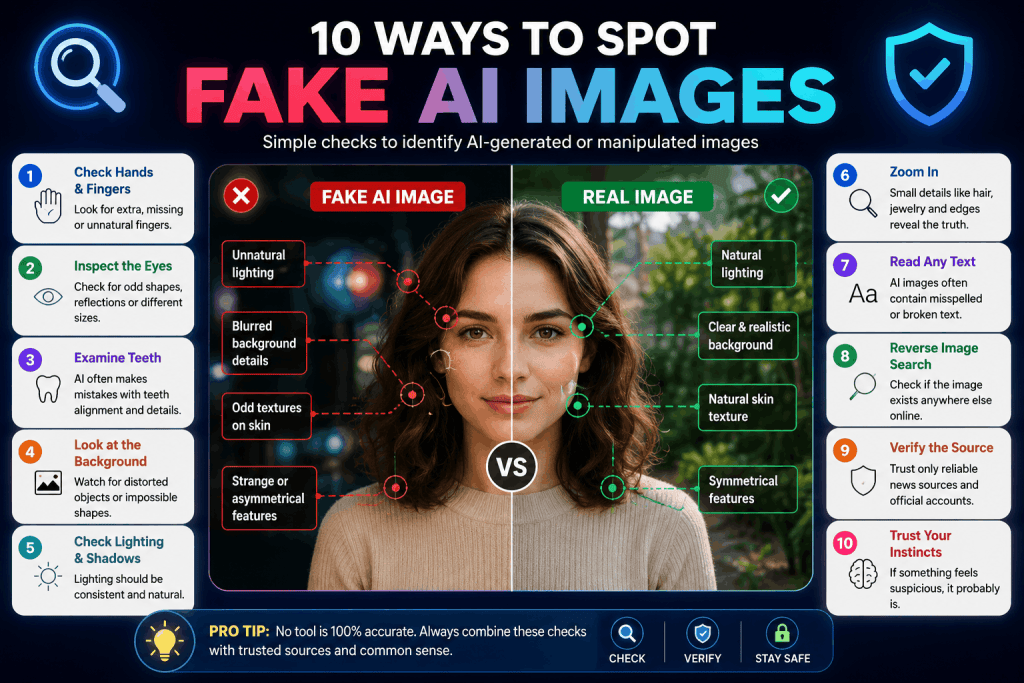
1. Look Carefully at Hands and Fingers
Although AI has improved significantly, hands remain one of the easiest areas where mistakes appear.
Watch for:
- Extra fingers
- Missing fingers
- Twisted hands
- Unnatural finger positions
2. Check the Eyes
Real human eyes usually contain natural reflections.
Fake images sometimes show:
- Different eye sizes
- Unnatural reflections
- Misaligned pupils
- Blank facial expressions
3. Examine Teeth
AI often struggles with detailed teeth.
Look for:
- Uneven spacing
- Blurry teeth
- Missing teeth
- Impossible smile shapes
4. Inspect Background Details
The subject may look realistic while the background contains obvious mistakes.
Examples include:
- Bent buildings
- Floating objects
- Distorted furniture
- Impossible shadows
5. Check Lighting
Natural lighting follows consistent directions.
If light hits the face from one direction but objects cast shadows elsewhere, the image may have been generated by AI.
6. Zoom In
Many AI mistakes become visible only after zooming.
Pay attention to:
- Hair edges
- Earrings
- Glasses
- Jewellery
- Clothing patterns
7. Read Any Visible Text
AI image generators frequently produce incorrect text.
Signs include:
- Random letters
- Misspelled words
- Broken logos
- Strange numbers
8. Reverse Image Search
Upload the image to Google Images or another reverse image search service.
If the image has never appeared before or suddenly appears on suspicious websites, investigate further before trusting it.
9. Verify the Source
Always ask yourself:
- Who shared this image?
- Is it from an official organisation?
- Has a trusted news website reported it?
Reliable sources usually confirm major events quickly.
10. Trust Your Instincts
If something looks too dramatic or emotionally manipulative, pause before sharing it.
Many fake AI images are designed to trigger strong emotional reactions.
How to Spot Deepfake Videos
Videos require even closer inspection.
Watch for these warning signs.
Unnatural Facial Movements
The face may appear smooth while blinking looks unusual.
Lip Synchronisation Problems
The person’s lips may not perfectly match the spoken words.
Robotic Voice
AI-generated voices sometimes sound:
- Flat
- Emotionless
- Overly perfect
Strange Head Movement
Head movements can appear stiff or unnaturally smooth.
Blurred Edges
Around the face, ears, or hairline you may notice blurry transitions where the AI replaced part of the original video.
Best Free AI Detection Tools
Several free tools can help analyse suspicious content.
Popular options include:
- Hive Moderation AI Detector
- AI or Not
- Deepware Scanner
- Illuminarty AI Detector
These tools are helpful but should not replace critical thinking.
How to Protect Yourself from AI Scams
Following a few simple habits can dramatically reduce your risk.
- Verify information before sharing.
- Follow trusted news sources.
- Avoid forwarding sensational content immediately.
- Use reverse image search.
- Be cautious of celebrity investment advertisements.
- Never send money based only on a video.
- Enable two-factor authentication on important accounts.
Many online scams also target smartphones through malicious apps and fake downloads. Read our complete guide on How to Remove Virus from Android (2026) to keep your Android device safe from malware and cyber threats.

Common AI Scam Examples
Cybercriminals increasingly use AI in scams.
Common examples include:
- Fake celebrity giveaways
- Deepfake investment promotions
- AI-generated identity documents
- Fake emergency family videos
- AI voice cloning phone calls
Understanding these tactics helps you recognise suspicious content more quickly.
Why Media Literacy Matters More Than Ever
AI technology will continue improving over the coming years. As fake content becomes more realistic, digital literacy becomes one of the most valuable online skills.
Instead of believing every image or video immediately, take a few moments to verify the source and examine the content carefully. A simple fact check can prevent misinformation from spreading and protect you from online scams.
Keeping your smartphone secure is just as important as identifying fake AI content. Don’t forget to check our article on 10 Hidden Android 17 Features You Should Enable Today to improve your phone’s privacy, security, and overall performance.
Final Thoughts
AI-generated images and deepfake videos are becoming increasingly realistic, but they are not impossible to detect. Small visual mistakes, unusual lighting, distorted backgrounds, and suspicious sources often reveal fake content.
By combining careful observation with trusted verification tools, you can avoid misinformation and stay safer online in 2026.
Staying safe online also means taking care of your overall well-being. You can also read our guide on 10 Superfoods You Should Eat Daily for Better Health in 2026 to improve your daily energy and maintain a healthier lifestyle.
Frequently Asked Questions
What is a deepfake?
A deepfake is an AI-generated or AI-edited video that makes someone appear to say or do something they never actually did.
Are AI-generated images always fake?
No. Many AI-generated images are created for art, education, design, and marketing. Problems arise when they are used to deceive people.
Can AI detectors identify every fake image?
No detector is perfect. Combining AI detection tools with manual inspection provides the most reliable results.
Why are deepfake scams becoming more common?
AI software has become more accessible and powerful, making it easier for scammers to create convincing fake media.
How can I stay safe?
Always verify suspicious images and videos, use trusted news sources, avoid sharing unverified content, and think critically before believing what you see online.

Comments
No comments yet. Be the first to comment!
Related Blogs
 Technology
Google Chrome Introduces AI Shopping Assistant in 2026
spidernewshub
 Technology
Google AI Updates 2026: New Gemini Features Explained
spidernewshub
 Technology
How to Check If Your Phone Has Been Hacked…
spidernewshub
Leave a Comment