
Google AI Updates 2026: New Gemini Features Explained
Google is taking artificial intelligence to a new level in 2026. From smarter Gemini models and AI-powered Search to more…
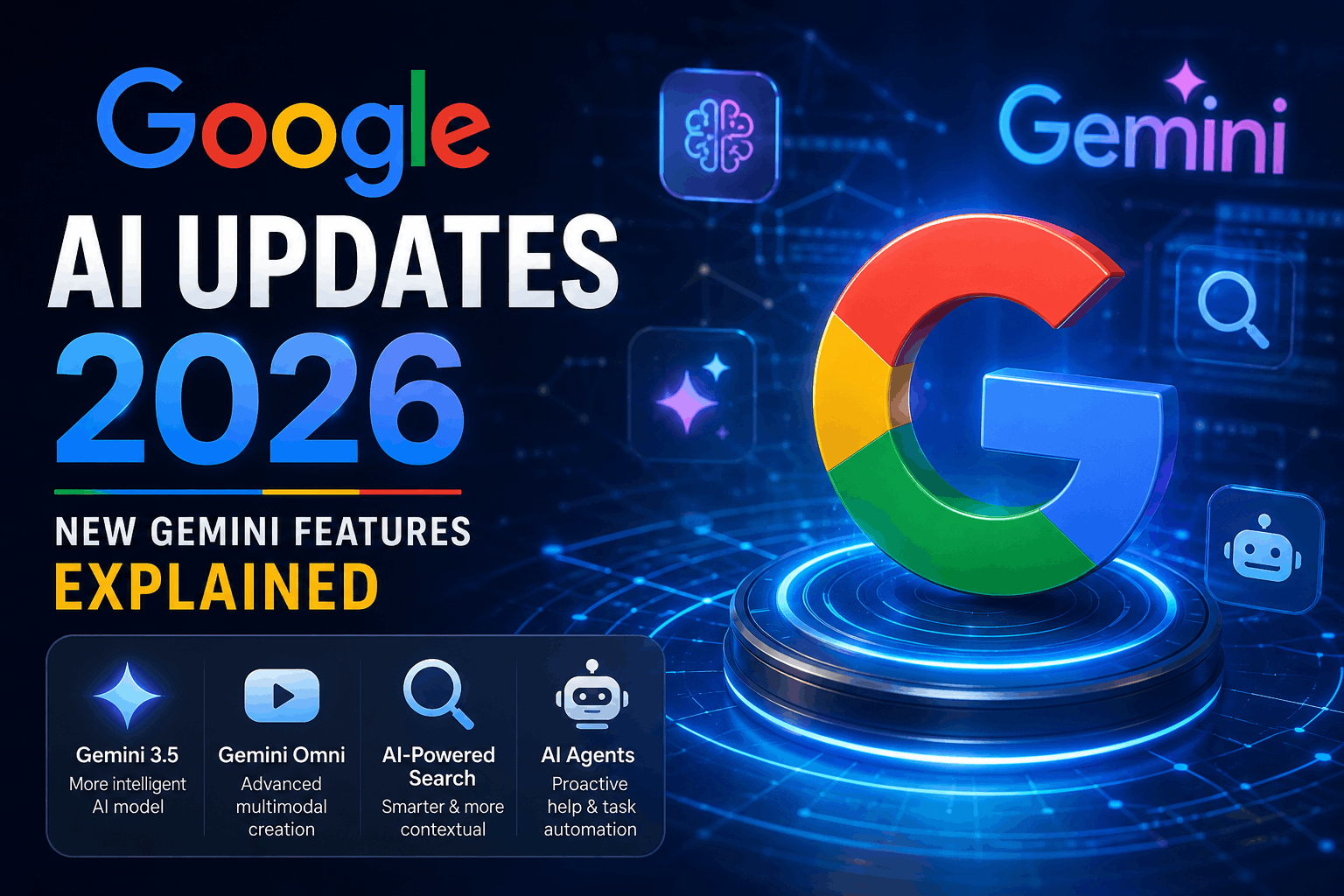
Google is taking artificial intelligence to a new level in 2026. From smarter Gemini models and AI-powered Search to more capable browser assistants and proactive AI agents, the company is bringing artificial intelligence into more parts of everyday digital life.
At Google I/O 2026, Google introduced major developments around its Gemini ecosystem, including Gemini 3.5 and Gemini Omni. The company is also expanding AI features across Search, Chrome, Android, Google Workspace, and other products.
These updates show a clear shift from AI that simply answers questions toward AI that can understand context, work across applications, and help users complete tasks.
What Is New in Google AI in 2026?
Google’s latest AI strategy focuses heavily on what it describes as an “agentic” approach. Instead of only responding to a prompt, newer AI systems are being designed to help with multi-step tasks and take actions under the user’s direction.
At Google I/O 2026, the company highlighted new models, agents, and tools designed to help people search, create, shop, discover information, and get more work done.
Some of the biggest developments include:
- Gemini 3.5
- Gemini Omni
- More advanced AI Search
- Gemini Spark
- Daily Brief
- Gemini in Chrome
- New AI features in Google Workspace
- More personalized Gemini experiences
Gemini 3.5 Brings More Capable AI
One of Google’s biggest AI announcements in 2026 was Gemini 3.5.
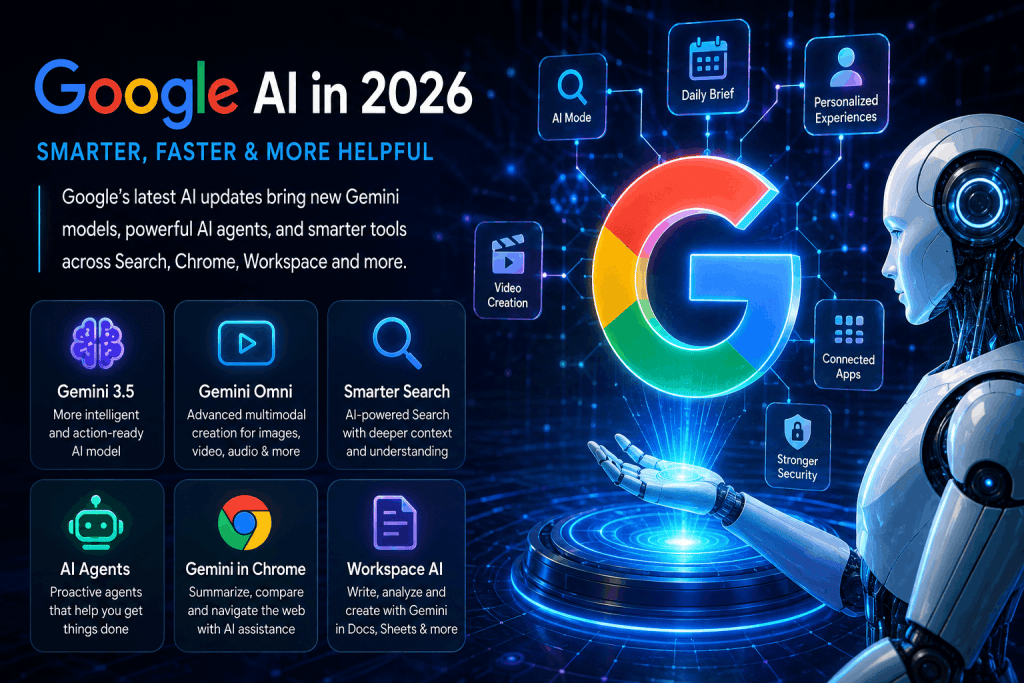
Google says Gemini 3.5 is designed to combine advanced intelligence with action, making it more suitable for complex, multi-step workflows. The model is being used across Google’s agent-focused development tools and AI products.
This is an important change because AI assistants are gradually moving beyond simple question-and-answer interactions.
For users, the long-term goal is an AI assistant that can understand what needs to be done, break a task into steps, and help complete it more efficiently.
Gemini Omni Focuses on Creation
Google also introduced Gemini Omni, a multimodal model designed to work with different types of input and generate different types of output.
At launch, Google focused heavily on video creation and editing. The company demonstrated how users can provide references such as images, text, video, or audio and use conversational instructions to create or modify content.
This could be particularly useful for:
- Content creators
- Video editors
- Social media users
- Designers
- Marketers
- Small businesses
Instead of learning complicated editing tools for every small change, users can increasingly describe what they want in natural language.
Google Search Is Becoming More AI-Powered
Google is also changing the way people search for information.
At I/O 2026, Google announced upgrades to AI Mode and introduced a redesigned Search experience that can work with different types of information, including text, images, files, videos, and Chrome tabs.
The idea is to make Search more capable of understanding complicated questions rather than simply matching keywords.
For example, a user researching a product, planning a trip, or studying a topic may be able to provide several pieces of information and receive a more contextual response.
This could change how people interact with search engines over the coming years.
Google Chrome AI Shopping Assistant

Gemini Is Becoming More Proactive
Another major direction for Google’s AI is proactive assistance.
Google introduced Gemini Spark as a personal AI agent designed to help users manage tasks and navigate their digital lives. Spark can operate under the user’s direction and is being developed to handle more complex tasks.
Google has also introduced Daily Brief, which can organize information from connected Google services and provide a personalized overview of the user’s day.
The goal is simple: instead of waiting for users to ask every question, AI can help identify useful information and suggest possible next steps.
Gemini in Chrome Gets Smarter
Google is also bringing more AI directly into the Chrome browser.
Gemini in Chrome can help users summarize lengthy web pages and compare information across multiple tabs. Google has also highlighted integrations with services such as Gmail, Calendar, Maps, and YouTube.
This means users can potentially perform several tasks without constantly switching between different browser tabs or applications.
For example, someone researching a topic could ask Gemini to compare information from several pages, while someone planning a meeting could use connected Google services to help organize the process.
Google says these experiences also include safeguards designed to identify threats such as prompt injection and to request confirmation before sensitive actions.
AI Is Becoming More Useful for Work
Google is also expanding Gemini throughout its productivity products.
New Gemini capabilities in Docs, Sheets, Slides, and Drive are designed to help users create documents, work with spreadsheets, build presentations, and find information across their files.
For example, Gemini can help users create a first draft from instructions, analyze information from selected sources, and answer questions about documents and other connected information.
These tools could be especially useful for:
- Students
- Office workers
- Freelancers
- Business owners
- Researchers
- Content creators
The biggest advantage is reducing repetitive work and giving users more time to focus on decisions and creative tasks.
More Personalized AI Experiences
Google is also making Gemini more personalized.
The company has introduced Personal Intelligence features that can use connected Google services, with user permission, to provide responses based on relevant personal context.
For example, connected information from services such as Gmail, Google Photos, YouTube, and Search can help Gemini provide more tailored responses.
Google emphasizes that connecting these services is an opt-in experience that users can manage through settings.
This makes privacy controls increasingly important as AI becomes more deeply connected to personal information.
What These Updates Mean for Everyday Users
The biggest change is that AI is becoming less like a separate chatbot and more like a layer built into everyday technology.
Users can now encounter AI while:
- Searching Google
- Browsing websites
- Writing documents
- Creating presentations
- Organizing files
- Editing images and videos
- Planning their day
- Managing information
This could make everyday technology easier to use, particularly for people who are not experts in complicated software.
Privacy and Security Still Matter
As AI becomes more connected to personal accounts and digital services, privacy remains an important consideration.
Users should understand which Google services they have connected to Gemini and review their available privacy settings regularly.
AI tools can become more useful when they have additional context, but users should still consider what information they are comfortable sharing with an AI system.
Google is also adding safeguards around sensitive actions and security threats as its AI systems become more capable of interacting with websites and applications.
What Could Come Next?
Google’s 2026 announcements suggest that AI development is moving toward more autonomous and context-aware systems.
Future improvements could bring AI agents that can handle increasingly complicated workflows, work across more applications, and provide more personalized assistance.
We may also see further development in areas such as:
- AI-powered shopping
- Automated research
- Smarter browser assistants
- Personalized learning
- AI video creation
- Workplace automation
- More capable digital agents
However, the availability of individual features can vary by product, subscription, country, device, and rollout stage.
ChatGPT-5.5 and its latest AI features
Final Thoughts
Google’s AI updates in 2026 represent a significant step in the company’s AI strategy.
Gemini 3.5 focuses on advanced intelligence and action, while Gemini Omni expands AI-powered creation. At the same time, Google is integrating AI more deeply into Search, Chrome, Workspace, and other products.
The biggest trend is clear: AI is moving beyond simple conversations.
Instead of only answering questions, Google’s newer AI experiences are increasingly designed to understand context, assist with complicated tasks, and work across the tools people already use.
For everyday users, this could mean faster research, easier productivity, smarter browsing, and more personalized digital experiences throughout 2026 and beyond.

Comments
No comments yet. Be the first to comment!
Related Blogs
 Technology
Google I/O 2026: Biggest AI Announcements You Should Know
spidernewshub
 Technology
Common WhatsApp Scams in 2026 and How to Avoid…
spidernewshub
 Technology
Windows 12: Everything We Know So Far in 2026
spidernewshub
Leave a Comment